
01 / Kitchen + Cooking
Cleaner Drinking Water
Reverse osmosis can help reduce dissolved solids in water used for drinking, cooking, coffee, and ice, when the system and water conditions are a fit.

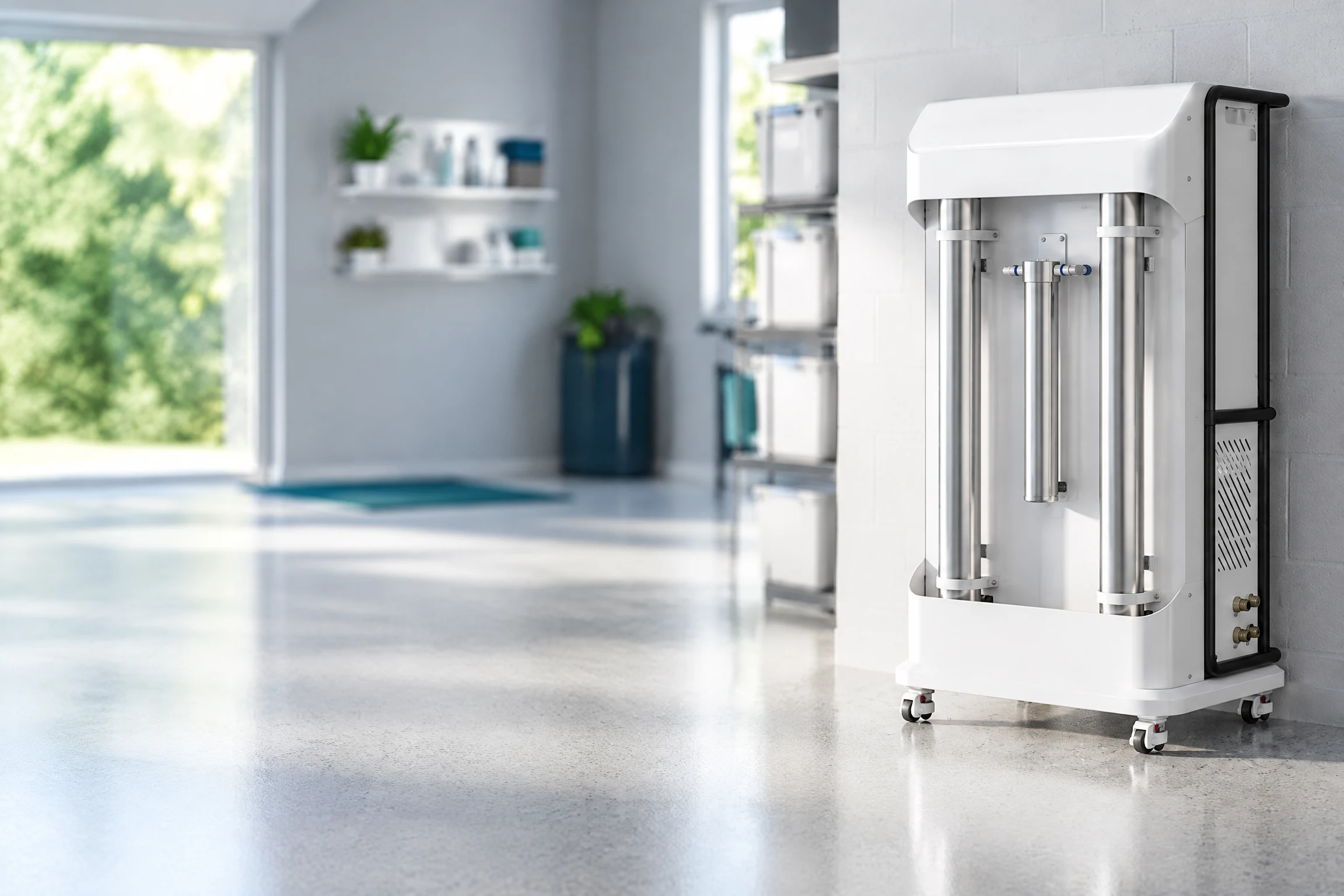
ADVANCED WHOLE-HOME WATER TREATMENT
One specialized system. Water treated before it reaches the rest of your home.
A whole-house RO system treats water before it reaches fixtures throughout the home. It is a specialty option for documented water conditions, not the default replacement for a source-matched softener, filter, and kitchen RO.
Whole-house RO is reviewed from documented water conditions and your home setup, not selected from a generic package.
WHY CONSIDER WHOLE HOUSE RO
Whole-house RO needs a technical review before a quote. We confirm the water concern, expected demand, room layout, drain path, incoming pressure, electrical supply, and service access before deciding whether this is the right path.
Reverse osmosis can help reduce dissolved solids in water used for drinking, cooking, coffee, and ice, when the system and water conditions are a fit.

A correctly designed whole-house setup treats water upstream of the kitchen, bathrooms, and laundry. Actual delivery depends on plumbing and demand.

If a whole-house RO system is warranted, treated water can support daily washing, showering, and household tasks across multiple fixtures.

Supplier-described monitoring lets you check system status, filter life, water use, and inlet and outlet TDS from a web-based dashboard.

WHOLE HOUSE REVERSE OSMOSIS · CHICAGOLAND
Whole-house RO is designed to treat water before it reaches the rest of the home. The number of fixtures served, pressure, and final result must be verified for your property.
THE WHOLE HOUSE RO SYSTEM
This configuration combines pretreatment, membrane separation, polishing, storage, monitoring, and protection functions in one equipment package. It requires a clear scope, not a quick online checkout.
System price only. Installation, required site work, and the final written scope are confirmed after the technical review.
Subject to credit approval and lender terms.This is the system price, not an installed package. Final equipment, site work, and service terms are confirmed in writing.
EQUIPMENT REFERENCE · CONFIRM AT QUOTE
This configuration combines pretreatment, membrane separation, polishing, storage, monitoring, and protection functions in one equipment package. It requires a clear scope, not a quick online checkout.
THE SYSTEM, UP CLOSE
Explore the equipment details behind this whole-home setup.

The treatment train combines pretreatment, membrane separation, UV, and final polishing.
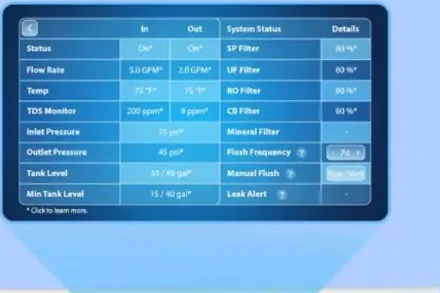
A reference dashboard shows operating status, flow, and filter readings.

Whole-home delivery is sized around pressure, fixtures, and peak household demand.
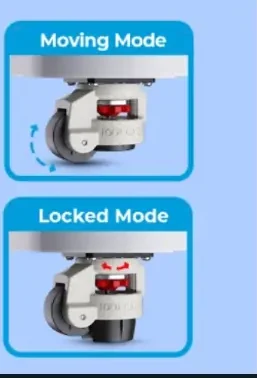
Built-in wheels support positioning and service access in a suitable indoor space.
Equipment photos and dashboard readings are illustrative. Treatment performance and flow depend on the tested water and final site design.
HOW THE FILTRATION TRAIN WORKS
The supplier groups seven functions into these six equipment steps. Select a stage to see what it is designed to do. Exact media and suitability are confirmed at quote.
HOW THE FILTRATION TRAIN WORKS / 01
Spin-down sediment protection and KDF media are the first treatment functions. Feed-water testing determines whether additional pretreatment is needed.
SMART WATER CONTROL
The supplier describes a web-based dashboard for checking inlet and outlet TDS, flow, usage, and filter status. Monitoring supports service decisions but does not replace water testing.
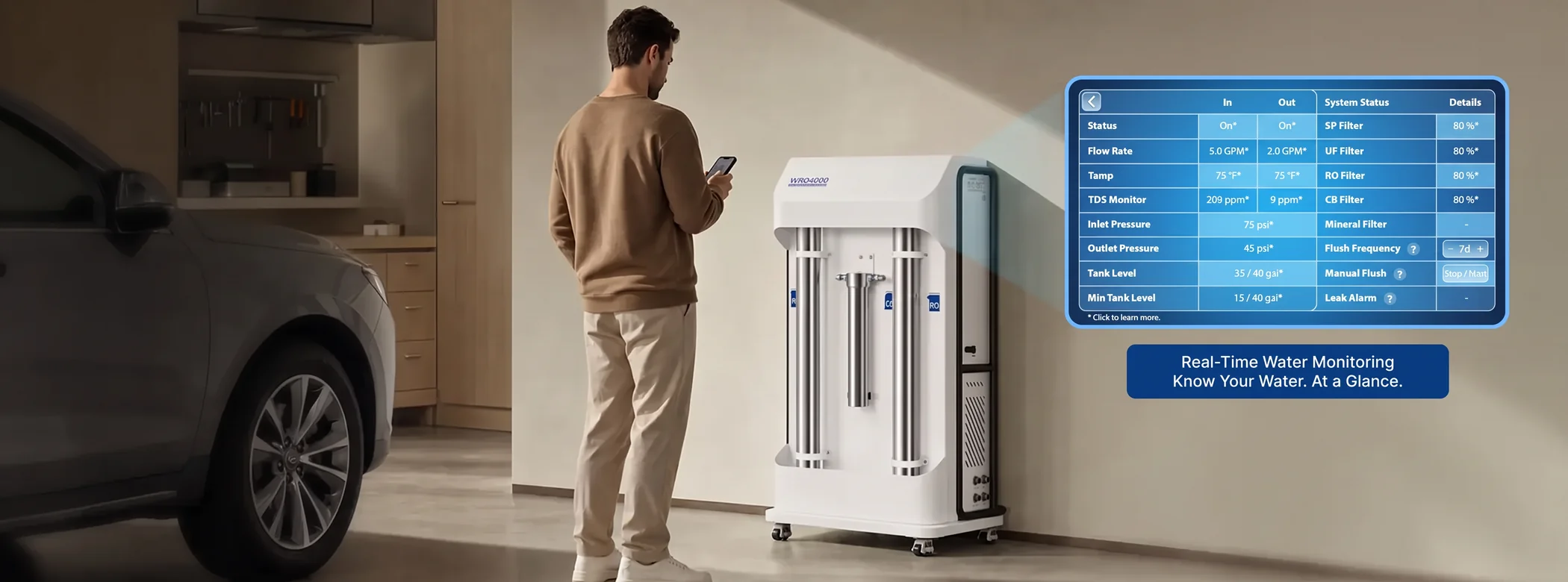
Dashboard readings shown are examples, not measurements from your home.
Review reported TDS, flow, and filter status on a connected device.
Supplier-described controls include flushing and pressure management.
Leak detection and automatic shutoff are described for this equipment configuration.
WHY CONSIDER WHOLE HOUSE RO
Drinking, preparing food, showering, and laundry can all draw from the treated supply when a whole-house installation is suitable and properly sized.
Request a Whole House RO ReviewPRE-QUOTE CHECKLIST
This is a high-involvement treatment system. We do not recommend it just because a homeowner wants better water throughout the home.
Municipal utility context, a private-well lab report, or a qualifying test result must support the reason for whole-house RO.
We verify indoor space, floor condition, inlet and outlet routing, drain path, electrical supply, and service clearance.
We review household use, bathrooms, fixtures, pressure, and any storage or flow needs before the final scope.
The written scope should identify filter service, membrane replacement, monitoring, flushing, and what changes with source-water conditions.
WHOLE HOUSE RO FAQ
Whole-house RO is more involved than a typical softener or kitchen RO. The answers below are visible here so you can see the decision path before you call.
No. Whole-house RO is the exception, not the default. Most homes are better served by source-matched whole-home treatment plus a dedicated RO system at the kitchen. We consider whole-house RO when the water data and the home conditions justify it.
For a private well, yes. Current lab results or a confirmed field test are required before a firm recommendation. For municipal water, we start with the serving utility, your home-specific concerns, and then determine whether additional testing is needed.
It needs an appropriate indoor utility location, incoming water connection, outlet connection, drain path, grounded electrical supply, and room for service access. We confirm these conditions before quoting.
The equipment reference lists supplier-published buffer capacity, maximum production capacity, and a pure-to-drain ratio. Those figures do not replace a review of your pressure, plumbing, peak use, and final installed configuration.
Maintenance depends on source water, usage, and the final treatment train. It can include prefilter or carbon service, membrane replacement, system monitoring, and checking the automated flushing and leak-protection functions. Your written scope should identify the actual maintenance plan.
It is intended to treat water before distribution throughout the home. Which fixtures receive treated water and what pressure they get depend on your plumbing, peak demand, and final installation design.
Reverse osmosis is designed to reduce dissolved solids and can address selected substances such as some metals and PFAS, depending on validated performance data, feed water, and configuration. We do not promise a contaminant count or removal at a specific home without testing.
The supplier describes a web-based dashboard accessible from a phone, tablet, or computer for status, filter life, usage, and water-quality readings. Connectivity and final controls are confirmed with the supplied equipment.
No. The supplier lists feed-water requirements including 70-110 psi pressure and 41-100.4°F temperature, plus an indoor installation. Source water must be evaluated, and private-well water must be tested before any firm recommendation.
That depends on inlet pressure, plumbing layout, simultaneous fixture use, and the installed configuration. The supplier's production figures are not a fixture-by-fixture pressure guarantee.
NO-PRESSURE TECHNICAL REVIEW
You will get a straightforward recommendation, including when a simpler source-matched system makes more sense.